by Martin Blick
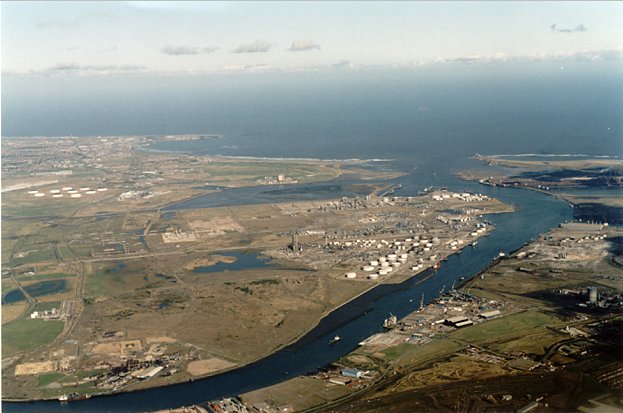
This is the last remaining section of the tidal mudflats North of the River Tees, said to be 10% of what was tidal 200 years ago.
There is no vehicular access to Seal Sands, but there are 3 points to park and then walk 10-15 minutes to the edge of the mudflats. The best option is to park in the newly refurbished car park at Cowpen Marsh (NZ507252), on the West side of the A178 Port Clarence-Seaton Carew road and just South of the Greatham Creek road bridge. From here one can walk to the Creek bridge, turn right (East) and walk along the South bank of Greatham Creek to the Seal Sands hide.
Another option is to park on the roadside North of the Creek bridge and walk East along the North bank of Greatham Creek to what’s known as the Greenabella wall. Turning left (North) along this wall beside the mudflats eventually brings one to a small crude hide close to Graythorp dock.
The third option involves parking at the East end of Zinc Works Road, walking East to Seaton Snook, then turning right (South) to view Seal Sands across the Seaton Channel. This is usually the coldest option in winter!
There are generally more birds on Seal Sands in winter than any other season; good numbers of Knot, Dunlin, Grey Plover, Curlew, and Shelduck, plus a Peregrine and a very small number of dark and pale-bellied Brent Geese in some winters. There used to be a gathering of up to 1000 diving duck in front of the hide in the 1980’s but now the occasional Goldeneye and Red-breasted Merganser are all that’s noted, as well as most of Teesmouth’s wintering Black-tailed Godwits.
Small numbers of divers and grebes can be found in Seaton Channel in cold weather, and seabirds like auks, skuas, Gannets and Kittiwakes have been seen on Seal Sands when it is rough at sea.
Seal Sands peninsula is visible from Seaton Snook, where roosting Oystercatchers, Cormorants and terns can sometimes be seen.
Few rare birds have occurred here but include Cleveland’s only Great Knot, first Long-billed Dowitcher and lesser rarities like White-rumped Sandpiper, Red-necked, Black-necked and Slavonian Grebes, and Spoonbill. A Chilean Flamingo was here from1971 to 1998 – an incongruous sight, but becoming quite famous within the industry of Teesside.
September 2019