by Martin Blick
The RSPB created a magnificent reserve on this site in the late 2000’s, officially opening in Jan 2009. Work to create ponds and marshes had been ongoing for 2-3 years before this, but the area of Saltholme has been a magnet for birdwatchers for many years.
Before it was marshes, ponds and farmland, it was part of the tidal mudflats and salt marsh of the River Tees, but reclamation of the area began in the 1800’s and eventually reduced the mudflats of Teesmouth to about 10% of its original area.
Birdwatching, in one form or another, has been practised here for well over a century, with records like Stone Curlew in 1843, Baillon’s Crake in 1882, Bluethroat in 1929 and 33 Bewick’s Swans in 1960. With the increase in number and ability of birdwatchers in the latter half of the 20th century, many rare and interesting birds have been recorded in the area, principally waders and ducks, but also birds of prey, warblers and seabirds.
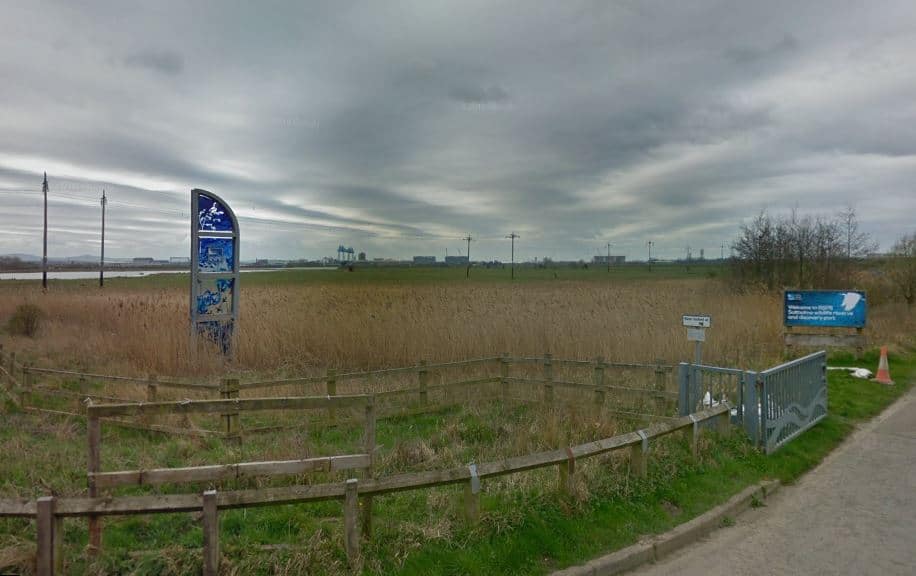
Access is from the A178 Port Clarence to Seaton Carew, approximately 1 mile N of Port Clarence. The visitor centre, with its car park, shop, classroom and cafe is at NZ503232 and it is well sign-posted from all directions. The newly-opened (2019) England Coast Path passes alongside the reserve and follows the A178 from the Transporter Bridge, between the 2 Saltholme Pools and onwards towards Cowpen Marsh and Greatham Creek.
Opening times are 9.30 am to 5.00pm (4.00pm in winter) and there are 4 hides all no more than 15 minutes walk from the centre. A map is available from the reception desk.
The Phil Stead hide (named after one of Teesside’s foremost birdwatchers) is on the North edge of the car park, looks over a smallish pond, and is generally open from 8am, so can be accessed before the reserve proper opens.
The Wildlife Watchpoint hide is a 5 minute walk to the North West, and looks over a pond and reedbeds.
Paddy’s Pool hide is 10 minutes to the South West and looks over a pond with a Black-headed Gull island in it, plus a large expanse of wet grassland within a fox-proof fence.
The fourth hide, known as Saltholme Pools hide, is the biggest in surface area, has a first-floor viewing area, and looks over most of the original water bodies on the reserve.
All hides are linked by a network of paths which are wheelchair accessible and there are numerous small (dragonfly) ponds. There is also a garden close to the visitor centre with a square pond in it, and a well-designed children’s play area beside the garden.
Overall, there are about 15 ponds on the entire reserve, including Haverton Hole (which is covered elsewhere). The best position for viewing most of the reserve is undoubtedly the first floor cafe, especially in the winter months and many interesting birds have been found whilst drinking tea/coffee in the cafe. The spectacle of the Common Tern islands and the Sand Martin wall is also best viewed from the cafe.
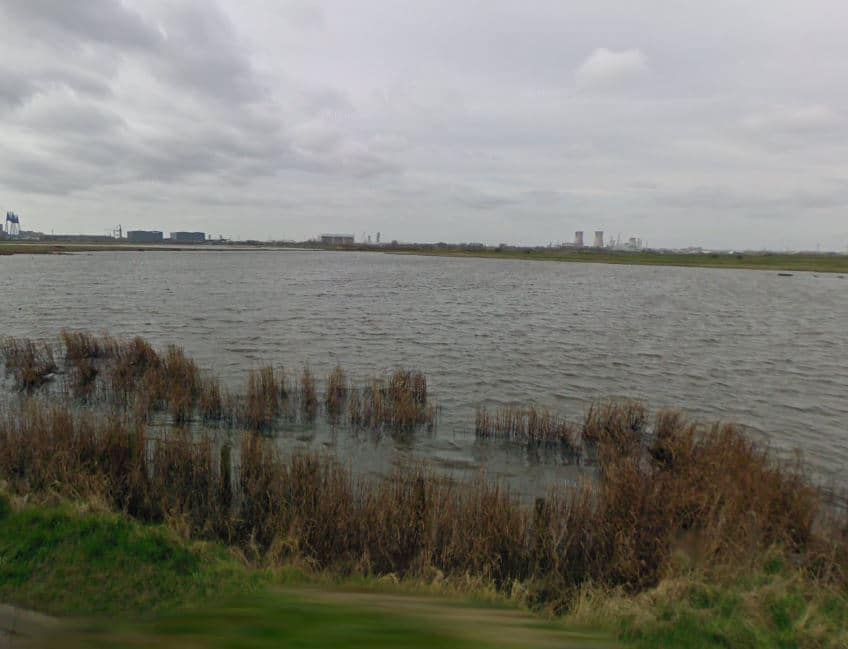
There is much to see throughout the year. Many birds are resident or nearly so, including hundreds of Greylag and Canada Geese, Water Rails, most of the Mallard, Gadwall and Tufted Duck, and sizeable flocks of Tree Sparrows and Goldfinches.
Spring brings close to 1000 pairs of Black-headed Gulls onto the islands, up to 100 pairs of Sand Martins to the artificial wall, and between 200 and 300 pairs of Common Terns onto the rafts and islands. The large expanses of phragmites hold many singing Reed and Sedge Warblers, with small numbers of Whitethroat and Willow Warblers in the bushes. Avocets have taken to nesting here since about 2016, and a few Marsh Harriers are seen in April and May.
Summer sees the breeding birds feeding their young, with ducklings of various species on all the ponds, 4-5 pairs of Mute Swans with cygnets and Swifts, Swallows and House Martins overhead.
Autumn brings passage waders to the muddy areas, principally Black-tailed Godwits, Ruff, Dunlin, Greenshank and sizeable flocks of Lapwings. Over 100 Barnacle Geese can be found on the grassland from mid-August, these being feral birds from North Yorkshire.
Winter is predominantly ducks, with around 3000-4000 Wigeon and lesser numbers of Teal, Shoveler, Pochard and Pintail. There is a notable passage of Whooper Swans and Pink-footed Geese in Oct-Nov, small groups sometimes dropping onto the reserve to rest, drink and feed before continuing on their journey South, sometimes only staying for an hour or two. This is also the best time of year to see the elusive Bittern.
The list of rare birds seen before the RSPB moved in includes Double-crested Cormorant, Kentish and American Golden Plovers, Long-toed Stint, Baird’s, Marsh and Spotted Sandpipers, Red-footed Falcon, Bonaparte’s Gull, Caspian Tern and Savi’s Warbler.
Since 2009, rare birds seen include Glaucous-winged Gull, Little Bittern, Black-winged Pratincole, Squacco Heron, Pallid Harrier, Great Reed Warbler, Bridled, Whiskered and White-winged Black Terns, Long-billed Dowitcher, Terek, White-rumped and Semi-palmated Sandpipers, and Blue-winged Teal.
Access to the reserve is free to RSPB members, but costs £5 per car for non-members; £2 for motorcycles.
Coach parties, as well as anyone arriving by bus, bicycle, or on foot are also free.
Sept 2019